Heat exchangers sit at the heart of most chemical processes. Their performance directly affects energy efficiency, operability, safety, and long-term plant reliability. At Sherle, we provide specialized thermal and hydraulic design services for industrial heat exchangers, including reboilers, condensers, evaporators, and shell-and-tube heat exchangers.
Using industry-proven tools such as HTRI Xchanger Suite and Aspen Exchanger Design & Rating (EDR), we design exchangers that perform reliably in real plant operating conditions – not just at design point.
Our services support:
We work across specialty chemicals, pharmaceuticals, petrochemicals, polymers, biofuels, renewable energy, oil & gas, and other process industries where thermal performance is critical.
In new and scaled-up plants, poor heat exchanger design is one of the most common causes of startup issues – leading to unstable columns, insufficient vaporization, flooding, fouling, or excessive energy consumption.
In operating plants, underperforming exchangers often become hidden bottlenecks that limit throughput or increase operating costs.
At Sherle, heat exchanger design is treated as an integrated process problem, tightly linked with process simulation, hydraulics, operability, and scale-up behavior – not just a standalone calculation.
Reboilers play a critical role in separation efficiency, column stability, and overall energy consumption. Sherle designs and optimizes all major reboiler types, selecting the appropriate configuration based on fluid properties, fouling tendency, temperature sensitivity, and required vaporization rates.
Our experience covers:
Design considers boiling-side heat transfer, two-phase hydraulics, circulation driving force, dry-out and flooding avoidance, fouling behavior, dynamic response to load changes, and long-term operability – especially important during first-time scale-up.
Sherle designs condenser systems for distillation columns, reflux systems, vapor recovery units, vacuum services, and polymer and chemical processes.
Our experience includes:
Design focuses on stable condensation across all operating cases, handling of non-condensables, pressure drop control, vapor drainage, vacuum integration, and heat recovery opportunities.
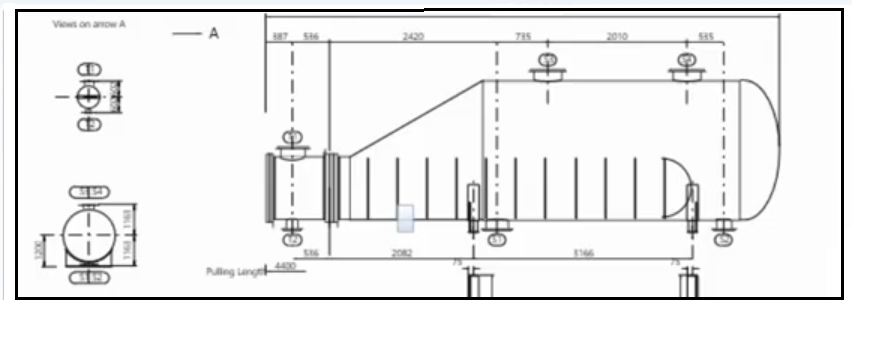
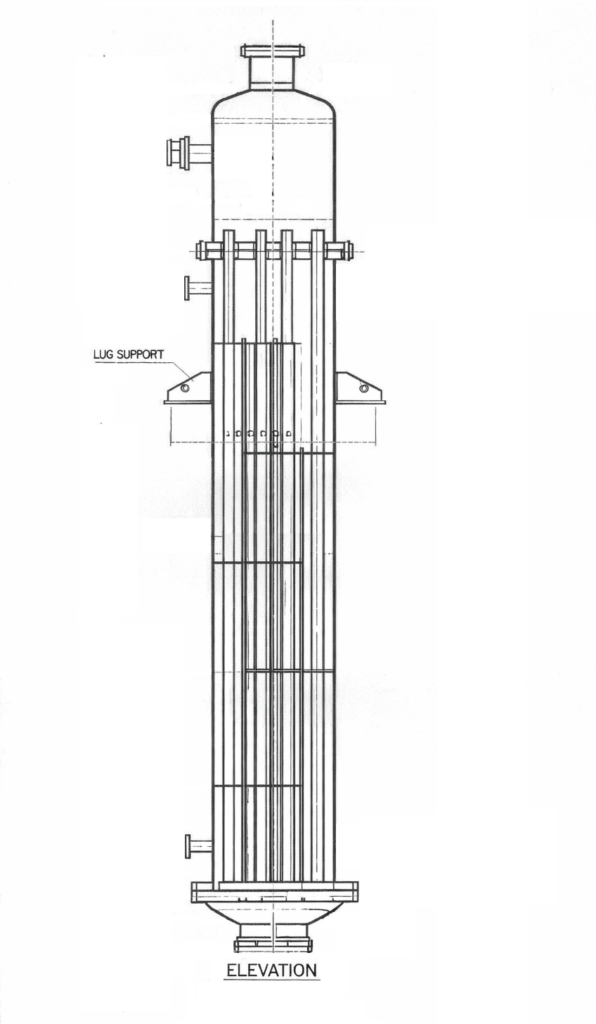
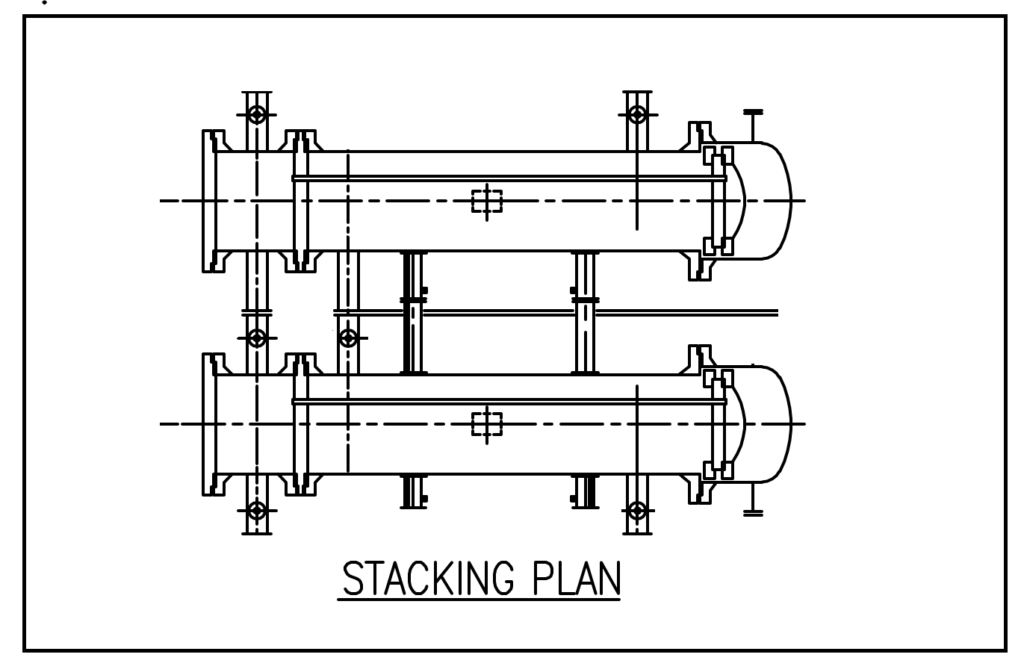
Shell-and-tube exchangers remain the workhorse of the process industry. We design exchangers for heating, cooling, condensing, vaporizing, and heat recovery in full compliance with TEMA and ASME standards.
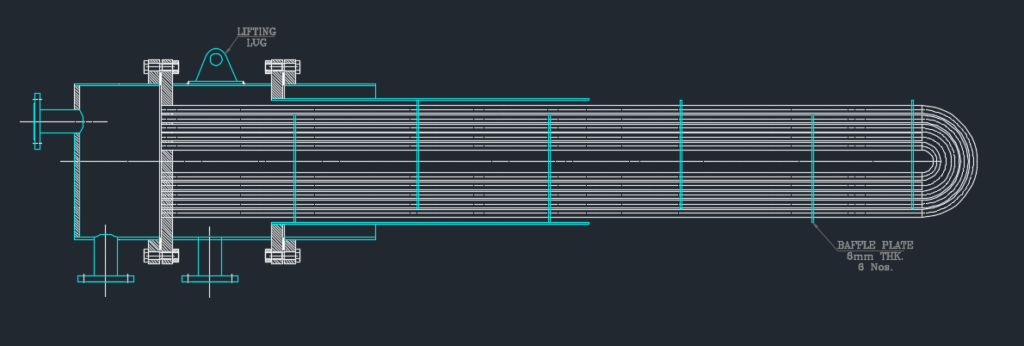
Design covers all common shell types (E, F, G, H, J, K, X), head types (A, B, C, N, S, T), and tube configurations including multi-pass, U-tube, fixed tube sheet, and floating head designs.
Thermal sizing is supported by detailed hydraulic analysis, optimized baffle spacing, fouling factor selection, tube vibration checks, and material selection considering corrosion, erosion, temperature, and pressure limits.

We design evaporators for concentration, solvent recovery, crystallization, and separation services, where thermal behavior directly impacts product quality and operating stability.
Our experience includes falling film, forced circulation, rising film, hybrid systems, wiped film and short-path evaporators, multi-effect evaporators (MEE), and mechanical vapor recompression (MVR) systems.
Design addresses film formation, dry-out prevention, vapor-liquid separation efficiency, circulation pump sizing, fouling behavior, steam economy, and heat integration – particularly valuable for energy-intensive and sustainability-focused processes.
In addition to new designs, Sherle provides thermal rating and troubleshooting for underperforming exchangers.
We commonly address low heat duty, excessive pressure drop, fouling and scaling, tube vibration, inadequate reboiler vaporization, poor condenser performance, and hydraulic maldistribution. Using HTRI and Aspen EDR, we identify root causes and recommend practical revamp solutions such as baffle redesign, tube material upgrades, flow distribution improvements, or operating condition changes – often without full equipment replacement.
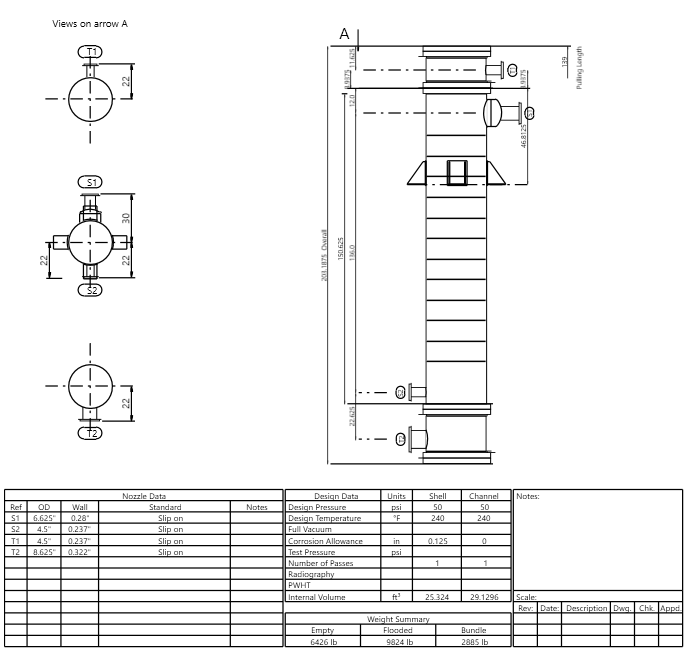
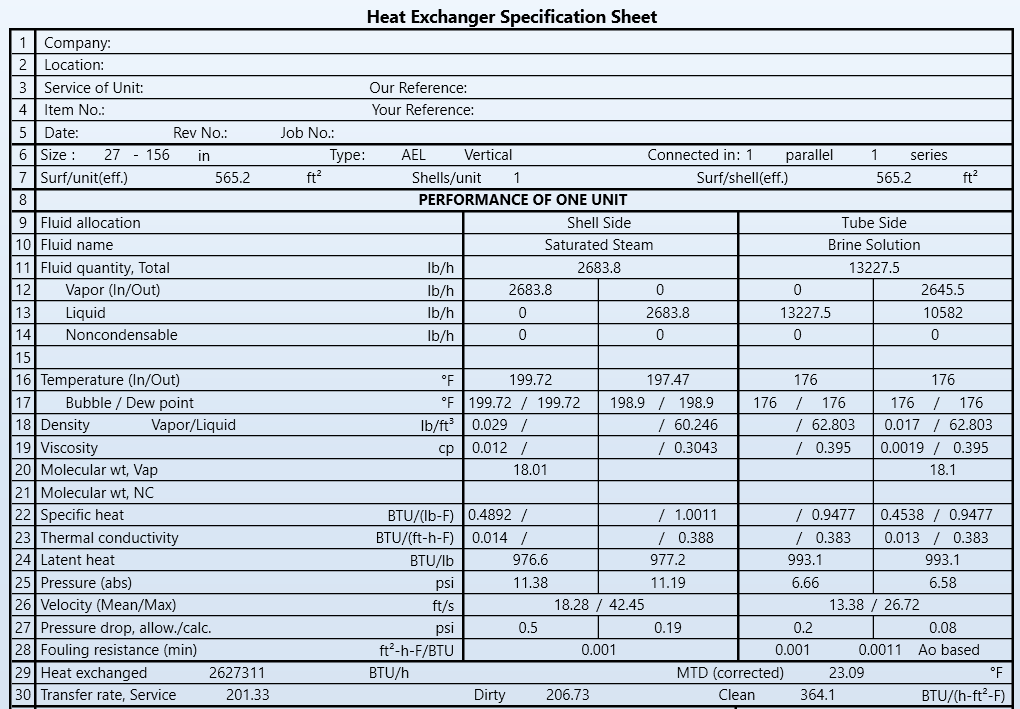
Typical deliverables include complete thermal design reports (HTRI / Aspen EDR), technical datasheets compliant with TEMA and ASME, GA drawings, hydraulic calculations, material selection guidance, and clear optimization or revamp recommendations.